

Safe Laser 1800 Vs 500 – Differences Between The Two Models With Respect To Wavelength And Output Power
The efficacy of photobiomodulation systems like the Safe Laser 1800/500 is controlled primarily by their key technical parameters. In particular the output power and wavelength are critical. While both devices operate on the exact same scientific principles as each one, the differences in their key technical parameters affect their distinct therapeutic applications, efficacy and depth. The wavelength determines the position of the energy source within the body. Power output is what determines the quantity and speed at which the energy is delivered. A comprehensive analysis of these factors reveals why the Safe Laser 1800 is engineered to be a powerful deep-tissue unit for clinics with high volumes, and the Safe Laser 500 is designed to be a portable, flexible device that can be used for both treatments that are both superficial and medium-depth.
1. Primary Wavelength is a common base for deep tissue penetration
The Safe Laser 1800 and the Safe Laser 500 utilize an 810 nanometer (nm) infrared laser wavelength as their main source of therapy. This is a deliberate and scientifically-grounded choice. The 810 nm wavelength resides within the "therapeutic window" (650-950 nm), where the penetration of light through blood, skin and even water is maximised. The wavelength is responsible for photobiomodulation through optimally absorbing cytochrome c in mitochondria. This means that the primary mechanism utilized to decrease pain, inflammation and healing of deep tissues (muscles ligaments, joints) is the same across both devices.
2. Hybrid Wavelengths System of the Safe Laser 500: 810nm+660nm
Safe Laser 500 uses a hybrid "cluster" application. This is what makes it unique. The central diode produces 810 nm laser light It is also surrounded by a ring of SuperLuminous Diodes (SLDs) that emit light at 660 nm. This wavelength of red light is more readily absorbed by hemoglobin, and other chromophores that are superficial. The wavelength of 660nm has a high level of effectiveness in treating issues at the surface, such as open wounds and skin ulcers. It is also effective for treating superficial burns and acne. The 500 is a dual wavelength treatment that targets both deep tissue (with 810nm) as well as superficial tissues (with660nm).
3. The Safe Laser 1900's 810nm focus is an all-in-one, high-power laser.
In contrast, the Safe Laser 1800 employs a single, high-power 810nm laser diode without supplementary wavelengths. Its philosophy of design is one of focusing intensity and the highest penetration depth. It is designed to overcome the absorption and scattering in tissues that are thick or dense by concentrating the power of one wavelength of 810 nm. This is the most effective instrument to penetrate deep joint capsules and the spine of those with greater body weight.
4. Peak Power Output A Quantity Differential
The primary distinction between them is their maximum power output. The Safe Laser 1800 delivers a peak output of 18 Watts (18,000 milliwatts). Safe Laser 500's peak output is five Watts (5,000 Milliwatts). The SL 1800 therefore has 3.5 times the raw power of the SL 500. It's not a question of effectiveness, but rather efficiency and the capacity to deliver a substantial dose of therapeutic treatment to difficult or deep-seated problems.
5. The impact on treatment time and clinical efficiency
The treatment duration is directly influenced by the power output. The dose of therapeutic treatment of PBM is measured in Joules (Energy = Power x Time). Safe Laser 1800 would need to be 18W for a 100 Joules dose. It would take around 5.5 minutes. The Safe Laser 500, at 5W, would take 20 seconds to deliver the same amount. A treatment protocol that required 500 Joules will take about 28 minutes to complete compared to 100. In a clinical environment that is busy the time savings achieved with the 1800 can be transformational, allowing for quicker patients' turnover as well as the efficient treatment of vast areas.
6. Beam Divergence & Coverage Area for Treatment
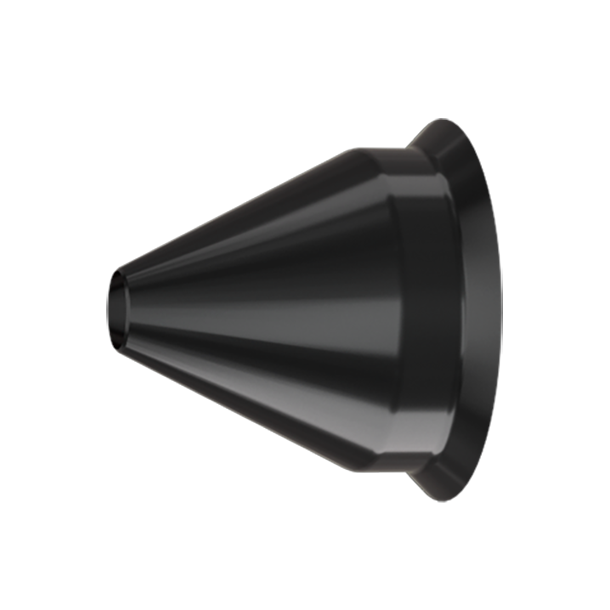
The physical characteristics of the light that is emitted is different. Safe Laser 1800 emits a different beam of laser light from its huge diameter head. This means the beam spreads out when it leaves the applicator, encompassing a larger surface area (several centimeters in diameter) on the skin. This is ideal for treating broad areas of pain or inflammation, like a strained quadriceps or lats. Safe Laser 500 has a cluster head with a focused application point. This makes it better at targeting localized structures such as triggers or tendon. The 660-nm circular area is able to treat the immediate tissue around the area.
7. Coherence of Photon Behavior in the Photograph
Safe Laser's 810nm laser source is a coherent laser. Theoretically coherent light penetrates tissue more effectively due to lesser scattering. Its greater depth penetration could be because of this. Safe Laser 500 is also coherent in its central 810 nm difode however the SLDs around it at 660 nm do not (though they are still monochromatic). Non-coherent laser light scatters much more. This is good for superficial wounds because it gives greater uniformity and broad coverage.
8. Wavelength and Power dictates the clinical indications
These technical differences define each device's ideal clinical application. Safe Laser 1800's powerful 810nm laser, in conjunction with its single-focus is a great choice for chronic inflammatory conditions and deep joint pathologies. Safe Laser 500 excels in treating acute soft-tissue conditions (sprains and tendinitis), as well as wound treatment, surgical scars as well as post-operative wounds.
9. Dosimetry: Practical Applications
The power differential influences how a doctor views dosing. Safe Laser 1800 has a very short exposure duration. Due to rapid energy delivery, the practitioner must move the device sufficiently to ensure that they don't treat the same point for too long. Safe Laser 500 offers longer treatment times for each point that are usually more flexible. They also work with certain of the device's automated dosage guides, which calculate treatment time depending on the condition selected and the settings for power.
10. Strategic Summary: Power vs. the ability to be flexible
The choice of wavelength and power will ultimately be an important decision. The Safe Laser 1800 is a device that has pure power and penetration, sacrificing the multi-wavelength versatility of the 500 for unmatched speed and depth. It's a reliable tool in challenging situations. The Safe Laser 500 is a tool of versatility and portability, offering a combined-wavelength approach in a compact format, making it ideal for mobile therapists or those focusing on a wider variety of superficial-to-mid-depth conditions. Both are equally effective however they are also adapted to various therapeutic fields. Read the recommended térd lézeres kezelése for site info including bemer terápia budapest, bemer terápia budapest, lézerterápia budapest, fizioterápia lézeres kezelés, széf lézer, safe laser bérlés, lézeres körömgomba kezelés veszprém, nagyteljesítmény? lézer, safe laser 500 részletre, laser lézer and more.
Safe Laser 1800 & 500: 10 Safety Measures You Should Know
Safe Laser devices are powerful Class 4 therapeutic lasers, and while they are non-ablative and non-ionizing, their high power output demands a rigorous approach to security. The first thing to remember is that "do no harm" is the primary principle. It is important that users, whether medical professionals or even home users with training, are aware of the risks and advantages of making use of these devices. The safety measures extend beyond reading an instruction manual. They include a protocol that includes pre-treatment screenings and proper operating procedures and strict compliance with contraindications in order to avoid adverse effects and to ensure the safety of both the patient and the operator. The following sections outline the fundamental safety measures required for the responsible usage of Safe Laser 1800 or 500.
1. Absolute Contraindications when to avoid use Absolutely
It is vital to determine situations in which lasers are absolutely not permitted. In these instances, laser energy can be harmful. Absolute contraindications
Active Carcinoma/Malignancy Do not apply laser energy to a cancerous tumor or metastasis. The light energy can stimulate cellular growth and increase the activity of tumors.
The Thyroid Gland The thyroid is metabolically active and can be sensitive to photobiomodulation. It is forbidden to directly apply the treatment over the thyroid articulation in the neck due the the risk of altering thyroid function.
The abdomen during Pregnancy The abdomen during pregnancy should not be used on the uterus of a pregnant woman to prevent any potential, yet unknown consequences on the development of fetus.
Direct Eye-Exposure: This rule cannot be violated.
2. All present must wear laser safety eyewear
It is crucial to remember that, even though the wavelength of 810 nm is not visible, it can still cause serious and irreparable eye damage when the beams are viewed directly from the outside or reflect. The single most important physical safety measure is the mandatory use of safety glasses that are laser-safe for the operator and anyone else in the immediate treatment area. The glasses must be tested for wavelengths between 810nm and the optical densities (ODs) that are appropriate for the device. Wearing regular safety glasses, or even sunglasses is not enough and can give the illusion of security.
3. Use caution when using the following warnings and precautions
Certain diseases are risky and should be treated only after an in-depth risk-benefit analysis by a licensed health expert. They include:
Photosensitivity. Patients who are taking medications that cause photosensitization may notice an increase in skin reactions.
Hemorrhage: Avoid direct application over bleeding that is active or hemorrhagic lesions, since vasodilatory effects can accelerate bleeding at first.
The most common recommendation is to not treat febrile illness when the fever is extremely high.
Endocrine Gland: Other endocrine glands, such as the pineal, must be avoided unless specified otherwise.
Children and Adolescents Avoid direct application on epiphyseal (growth) plates within bones.
4. Correct application technique to avoid the risk of thermal injury
While Safe Laser therapy is "cold" lasers in general, the high power of the 1800 (18W) means that holding the device completely stationary on the skin for a prolonged period can lead to a localized thermal buildup that could end up causing a mild burn. As per manufacturer and clinician guidelines, the most important precaution is to keep the device moving slowly and constantly throughout the treatment. This will ensure an even distribution and will prevent any area that is exposed to harmful thermal dosage.
5. Pre-treatment Skin Assessment and Preparation
Examining the area of treatment is a straightforward, yet essential safety precaution. The skin should not be damaged, but clean and dry. Do not apply the laser on broken or infected tissue, skin rashes, or other areas of damaged tissue without medical guidance. Remove any reflective surfaces like jewelry from the treatment site. Make sure that the skin is clean and free from the effects of lotions, topical medications, or oils that can affect skin absorption, or in some cases, cause photosensitivity.
6. Device Handling and Operational Safety
To ensure safety, it is vital to handle the device. Safety is ensured by:
Make sure the device is checked prior to use Check the device and the heads of applicators for any signs or damage.
Secure Grip: Hold the device using the device in a secure grip, and in particular, the wrist strap, to ensure that it is not dropped. It could cause damage to the laser internal components and housing.
If not in use when not in use, place the device (and its safety glasses) in the protective case provided in a secure location away from extreme moisture dust, extreme temperatures.
7. Environmental Safety and Reflective Surfaces
It is crucial to think about the environment in which you are working. Be conscious of surfaces that have reflective properties, like mirrors or fixtures made of metal. A laser beam reflecting off of a surface could be equally dangerous as the primary beam. The patient should be placed in a manner that will ensure the laser is not reflected off a surface into an eye, even if the beam was accidentally directed at the incorrect direction.
8. Biphasic and Dosage Adherence
One important safety and effectiveness measure is strict adhering to the prescribed dosage (Joules/cm2). Additionally, it is ineffective (due to the biphasic effect of excessive energy) Excessing the dose recommended could result in negative effects. This is due to the fact that it may cause tissue irritation, or worsen the inflammation. The "more's better" approach to PBM is dangerous and untrue. The treatment protocol and duration should be followed exactly.
9. Monitoring and Documentation of Post-Treatment
Safety monitoring does continue even if the device is shut off. The user must take note of the health of the patient following treatment and inquire about any unusual feelings that develop within the next 24 to 48 hours. While serious adverse side effects from regular use are uncommon, documentation of the treatment parameters and patient responses is essential for evaluating the long-term effects and identifying individual sensitivities.
10. Training for Users and Professional Monitoring
A thorough user education program is the most effective safety measure. That means that the medical personnel will be provided with formal instruction in the use of the device and PBM science. Home users are required to follow the directions of a physician who is licensed and has issued an assessment and an treatment plan. Safe Lasers are not to be used without knowing the safety precautions. Since the only accountability for safe operation lies with the user and their knowledge, the most crucial safety feature is to be aware. Read the best BEMER bérlés for website examples including lézeres fizikoterápia, lézeres terápia, lézerterápia hatása, lagylezer terapia, soft laser árak, sef lézer, lézer bérlés, lézerfény terápia, gyógyító lézer, lágylézer terápia vélemény and more.
